
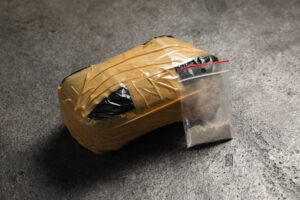
Yes, you can be charged if a package containing drugs is mailed to your home in Hawthorne, CA, but simply receiving a package is not a crime. To convict you, prosecutors must prove that you knew the package contained drugs and that you intended to possess or control them. Many of these cases begin with a “controlled delivery,” where law enforcement intercepts the package, lets it arrive at your door, and makes an arrest once someone accepts it. Whether the case holds up often comes down to what evidence, if any, connects you to the contents.
Below, GBART Law explains how these cases work and how they can be defended.
How Do Drug Package Cases Usually Start?
Most mailed-drug cases begin long before the package reaches your street. Packages can be flagged in a number of ways:
- Postal inspectors or customs officers notice unusual packaging, odors, or shipping patterns
- A drug-detection dog alerts on a parcel at a sorting facility
- A private carrier opens a suspicious package and alerts authorities
- Investigators are already tracking a sender or a shipping network
Hawthorne sits close to LAX, one of the busiest cargo and international shipping hubs in the country, and packages moving through the region can receive extra scrutiny from federal and local agencies.
Once a package is identified, officers often obtain a warrant, open it, and confirm the contents. They may then replace some or all of the drugs with a harmless substance and reseal the package.
What Is a Controlled Delivery?
A controlled delivery is an investigative technique where officers allow a package to be delivered while they watch. In many cases, an undercover agent poses as a mail carrier or delivery driver. Officers may also place a tracking device or a sensor inside the package that signals when it has been opened.
Investigators frequently obtain what is called an anticipatory search warrant. This warrant only becomes valid once a specific event occurs, such as the package being accepted and taken inside. When that happens, officers may enter and search the home.
Because these warrants depend on specific triggering conditions, your attorney should carefully review whether those conditions were actually met before officers entered. If they were not, the search may be challenged.
Does Accepting a Package Prove I Knew What Was Inside?
No. Signing for a package or carrying it inside does not prove you knew it contained drugs. People routinely accept packages for roommates, family members, neighbors, or previous residents. Mistaken addresses and packages sent by someone trying to avoid detection are also common.
Under California law, and in federal court, the prosecution generally must prove knowledge. That means showing you were aware of the drugs’ presence and their nature as a controlled substance.
What Evidence Do Prosecutors Use to Prove Knowledge?
Since knowledge is the key issue, prosecutors look for anything that ties you to the package beyond the delivery itself. Common examples include:
- Your name on the shipping label, especially if spelled in a way only you would use
- Phone or internet records showing someone tracked the package
- Text messages or calls about a delivery around the same time
- Prior packages from the same sender
- Your behavior when the package arrived, such as waiting for it or immediately opening it
- Statements you made to officers after the delivery
- Large sums of cash, scales, or packaging materials found in the home
That last point matters. If officers find additional evidence during the search, prosecutors may argue that you planned to sell the drugs, which can turn a possession case into a more serious possession-for-sale or trafficking case.
Will My Case Be State or Federal?
It depends on the facts. Many mailed-drug cases stay in state court and are prosecuted in Los Angeles County. However, because these cases often involve the U.S. mail, interstate shipping, or international packages, federal agencies like the U.S. Postal Inspection Service, Homeland Security Investigations, and the DEA may become involved.
Federal drug cases can carry mandatory minimum sentences based on the type and quantity of drugs. If federal agents were part of the investigation, it is important to work with a lawyer who handles federal crimes defense and understands how these prosecutions are built.
What Defenses Are Available in a Mailed-Drug Case?
Every case is different, but common defense strategies include:
- Lack of knowledge: Showing that you had no reason to know what was inside the package.
- Someone else was the intended recipient: Demonstrating that another person in the household, a former tenant, or an unknown sender was responsible.
- Challenging the search: Examining whether the initial interception, the opening of the package, and the anticipatory warrant were all legally valid.
- Suppressing statements: Reviewing whether officers questioned you improperly after the delivery.
- Questioning the evidence: Testing lab results, chain of custody, and whether the quantity alleged is accurate.
- Disputing intent to sell: Arguing that any additional items found in the home do not prove sales activity.
What Should I Do If Police Show Up After a Package Arrives?
If officers arrive after a delivery, stay calm and do not resist. Do not explain where the package came from, who it was for, or what you expected to receive. Even innocent explanations can be twisted or used to establish knowledge. Clearly state that you want to remain silent and speak with a lawyer, and do not consent to any search.
If you later learn that you are under investigation, avoid contacting the sender or discussing the package by phone or text, since these communications may be monitored or recovered.
Why Choose GBART Law?
Our attorney has worked as a police officer, a prosecutor, and a defense attorney. That gives us insight into how controlled deliveries are planned, how warrants are drafted, and where these investigations commonly go wrong. We have secured dismissals and reduced charges in serious drug cases, including transportation and possession-for-sale cases involving large quantities of drugs.
Speak With a Hawthorne Drug Crimes Defense Attorney Today
A package you never ordered should not cost you your freedom. If you have been arrested or contacted by investigators after a drug package was delivered to your home in Hawthorne, call GBART Law at (951) 221-3998 or request your free, confidential consultation today.