
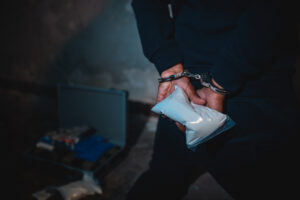
If you’ve been charged with a drug crime in Rialto, CA, one of the first things your attorney will look at is what substance was involved and how much of it was allegedly in your possession. These two factors — drug type and quantity — have an enormous influence on how your case is charged, what penalties you face, and what defense strategies are available. Understanding how they work can help you make sense of what you’re up against.
Drug Classification Under California Law
California, like the federal government, categorizes controlled substances into schedules based on their potential for abuse and whether they have accepted medical uses. Schedule I substances — such as heroin and certain fentanyl analogues — are treated as the most serious, while Schedule II through V drugs carry progressively lower classifications, though they can still result in significant charges.
Methamphetamine, cocaine, and fentanyl tend to draw the most aggressive prosecution in Southern California. Marijuana, while legal for recreational use in California, can still lead to criminal charges when possessed in unlawful quantities, sold without a license, or transported across state lines. Prescription drugs become a criminal matter when possessed without a valid prescription or with intent to distribute.
How Quantity Affects Your Charges
The amount of a drug found in your possession is often what separates a simple possession charge from a much more serious possession for sale or trafficking charge. Prosecutors use quantity as evidence of intent — the argument being that no one needs a large amount of a controlled substance for personal use alone.
California law sets specific weight thresholds that trigger sentencing enhancements. For example, in health and safety code cases involving certain substances, carrying amounts above defined thresholds can add years to a sentence. In federal drug cases, mandatory minimum sentences are tied directly to drug weight, and the differences between threshold amounts can mean the difference between a few years and a decade or more in custody.
The Role of Packaging and Other Circumstantial Evidence
Quantity rarely stands alone. Prosecutors typically pair drug weight with other evidence to build a possession-for-sale case — things like separate baggies or packaging, scales, large amounts of cash, text messages referencing transactions, or the absence of paraphernalia associated with personal use. The stronger that surrounding evidence, the harder they’ll push on the weight.
This is why challenging the quantity itself matters. If drugs were weighed improperly, if the lab testing was flawed, or if the measured amount included cutting agents or other non-controlled substances, GBART Law can challenge whether the threshold for an enhancement was actually met.
How Drug Type and Amount Shape Defense Strategy
When the substance involved is heavily regulated or the quantity is high, defense strategy often shifts toward suppression, lab challenges, and negotiation. If the search that produced the evidence was unlawful, the quantity becomes irrelevant — the case may not survive without it. If the evidence was lawfully obtained, GBART Law will examine whether the lab results are accurate, whether the weight calculations are defensible, and whether the circumstances truly support an intent-to-sell charge versus simple possession.
For lower-level offenses involving smaller amounts, diversion programs and treatment alternatives may be on the table. For larger-scale cases, the focus shifts to minimizing exposure and protecting against the most serious enhancements.
Get a Case Evaluation from GBART Law
The type and amount of drug in your case shapes everything that follows. Call (951) 221-3998 today for a free, confidential consultation and let GBART Law break down exactly what the evidence means for your situation in Rialto, CA.