
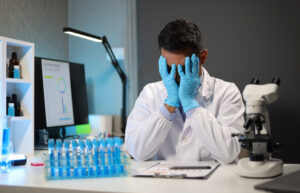
Lab testing errors can significantly undermine a drug case in Whittier, CA, because the prosecution’s entire case often depends on accurately identifying a substance as an illegal drug. If the testing process was flawed, contaminated, or improperly documented, the evidence against you may be challenged or excluded entirely, which can weaken or even collapse the case against you.
What Types of Lab Errors Commonly Occur?
Forensic drug testing is not infallible, and several types of errors can arise during the collection, storage, and analysis of evidence, including:
- Contamination: Samples mixed with other substances during collection or storage
- Mislabeling: Evidence confused with samples from other cases due to clerical mistakes
- Equipment malfunction: Faulty or poorly calibrated testing instruments producing inaccurate results
- Human error: Mistakes made by lab technicians during analysis, measurement, or reporting
- Chain of custody gaps: Missing or incomplete documentation showing who handled the evidence and when
Any one of these issues can call into question whether the substance was accurately identified, weighed, or classified as an illegal drug in the first place.
Why Does Chain of Custody Matter So Much?
Chain of custody refers to the documented trail showing how evidence was collected, stored, and transferred from the moment police seized it to when it was tested in a lab. If there are gaps or inconsistencies in this documentation, important questions arise, such as:
- Was the evidence secured properly at every stage of the process?
- Did the substance actually tested match what was originally seized from you?
- Could the sample have been tampered with, contaminated, or switched with another case?
- Who had access to the evidence, and were all transfers properly logged?
Breaks in the chain of custody can be used to argue that the evidence presented in court isn’t reliable enough to support a conviction, regardless of what the lab report ultimately states.
Can a Defense Attorney Challenge Lab Results?
Yes. A defense attorney can challenge lab results in several important ways, including:
- Requesting an independent retest of the substance by a separate, qualified lab
- Reviewing the original lab’s certification, testing protocols, and history of errors or complaints
- Cross-examining the lab technician about their specific testing methods and qualifications
- Filing motions to exclude evidence if the chain of custody was broken or improperly documented
- Investigating whether the lab followed accepted scientific standards during testing
If lab results are successfully challenged, discredited, or excluded, prosecutors may be left without sufficient evidence to prove beyond a reasonable doubt that the substance was actually illegal.
What Should I Do If I Suspect a Testing Error?
If you believe lab errors may have affected your case, it’s important to take the following steps:
- Request full access to the lab report and detailed testing methodology used
- Ask your attorney whether an independent retest of the evidence is possible
- Document any inconsistencies you notice between the alleged evidence and what was actually seized from you
- Discuss the specific lab’s history, reliability, and any past disciplinary issues with a defense attorney
- Avoid assuming a lab report is automatically accurate or beyond question
At GBART Law, we routinely scrutinize forensic lab work in drug cases throughout Whittier, looking closely for errors, inconsistencies, and procedural failures that can be used to challenge the prosecution’s evidence and protect your rights.
Call GBART Law Today
If lab testing errors may be affecting your drug case in Whittier, CA, don’t leave it unchallenged. Call (951) 221-3998 today for a free, confidential consultation.